Ancient
The temple
A pharaoh's shrine
See the tourGuides
Language
Currency
Find open dates$206 and up · free cancelTap-to-check list
List of 9 items
Tick items as you finish them. We save your progress on this device.
0 / 9 ready
Nothing left to do. Only your date and your hotel pickup in Cairo or Giza are left to choose.
Reserve a spotA temple built for a living pharaoh, tombs of wealthy merchants and a cemetery of gilded mummies found by a stumbling donkey: the story of the oasis in the order it came to light.
Editorial team, bahariyaoasis.quest · Updated November 23, 2026 · Reading: 7 min
The essentials
Bahariya is better known today for its deserts than its ruins, but the oasis has a long record. The Egyptian Tourism Authority describes an oasis spanning over 2000 square km and is home to ruins such as the Temple of Alexander the Great, painted Ptolemaic tombs and very old churches.6,7 The Ministry of Tourism and Antiquities ranks its Graeco-Roman finds among the most significant in Egypt.8
Egyptologist Zahi Hawass writes that Bahariya served as a crossroads for various cultures, and that for centuries the area around Bawiti was a crucial caravan station for traders and soldiers.9 Water is the reason. A green oasis amid dry hills draws people, and the same springs that feed the palms today fed settlements that left tombs, temples and a fortress behind.
Bahariya also has an unusual administrative position. It falls under the Giza governorate, and therefore under the jurisdiction of the Giza Department of Antiquities, even though it lies far to the southwest of the pyramids.10 Hawass puts the oasis roughly 380 km west of the pyramids, while the Ministry measures 370 km southwest of Cairo, and both describe the same long desert drive.11,12
The sites
| Site | What it is | What the sources say |
|---|---|---|
| Temple of Alexander | Sandstone temple | Built in 332 BC, unique for a living pharaoh.1,2 |
| Tomb of Amenhotep Huy | Governor's tomb | The oldest known tomb found in the oasis so far.17 |
| Tomb of Bannantiu | Painted merchant tomb | Larger and more decorated than his father's.18 |
| Valley of the Golden Mummies | Roman-period cemetery | 4 tombs held 105 mummies.3 |
| The Bawiti Museum | Museum | Home to the golden mummies.5 |
| El Haiz | Roman-period settlement | The large fortress is the most prominent monument.19 |
All entries are from the Egyptian Tourism Authority and from Zahi Hawass's published account; check opening hours on the day.5,1
Hawass dates the temple to 332 BC, the year Alexander the Great arrived in Egypt.1 He calls it unique: no other temple in Egypt went up for a pharaoh who was still alive.2 Bahariya Oasis temple excavations centre on the Temple of Alexander the Great in Bahariya Oasis, a ruin that was dug out and studied. It is a modest building rather than a grand one, which suits its place on the edge of a village, and its importance is in what it records: a Macedonian conqueror taking the role of an Egyptian king.
The temple has 2 chambers built of sandstone, a common building material in Bahariya, according to Hawass.16 He says it was excavated by the Egyptologist Ahmed Fakhry, who worked on it in 1938 to 1942.14 Today the ruin is a low plan of walls, and a visit works best with a guide or a good source on hand to explain where the sanctuary, the storerooms and the priests' houses stood.
The Egyptian Tourism Authority lists the temple first among the ruins of the oasis.7 Its small scale is part of the charm for those who like quiet places. Visit early or late in the day when the sandstone glows and the light is gentle, and combine it with a walk through Bawiti to see how modern houses sit beside the ancient sites.
A short chronology
332 BC
Built when Alexander the Great came to Egypt.1
The 4th century AD
Hawass says the cemetery appears to have been used until then.13
1938 to 1942
Ahmed Fakhry excavated the temple in these years.14
May 1996
Hawass first saw the mummies and kept them secret.15
The excavation
4 tombs held 105 mummies, many gilded.3
Today
The golden mummies are the pride of the Bawiti Museum.5
Beyond the temple, the oasis holds tombs from the period when Bahariya grew rich. Hawass describes the tomb of Amenhotep Huy, governor of Bahariya, as the oldest known tomb found in the oasis so far.17 The Tourism Authority adds the Tomb of Banentiu to its list of places to visit in the oasis, a name that appears in Hawass's account as Bannantiu.20
Hawass says Bannantiu's tomb is larger than his father's and carries richer decoration.18 The picture is of a merchant family that bought a place in the afterlife with wealth, not with rank. It is a human story, and it explains why the painted tombs of the oasis feel more personal than royal monuments: they were made for people who got rich by trade and wanted to be remembered.
Details of opening hours and access change, and the sources used here give none, so check with the antiquities inspectorate in Bawiti or your guide on the day. The sites sit among houses, fields and palm groves, so allow time to walk. The Ministry also suggests cycling in and around the oasis to explore villages, springs, palm groves, orchards and historical sites.22
Plan your history day
Tell us what interests you and the first place to look appears.
If I want to see mummies
The Bawiti Museum
The Tourism Authority calls them the pride of the museum.5
If I like ancient temples
The Temple of Alexander
If I like painted tombs
The tombs of Bawiti
The Tourism Authority lists the Tomb of Banentiu.20
If I want the story behind it all
Read Hawass's account
If I only have time for a desert tour
Ask the operator
The listing names Bawiti but not the museum.
Pick a site
Ancient
A pharaoh's shrine
See the tour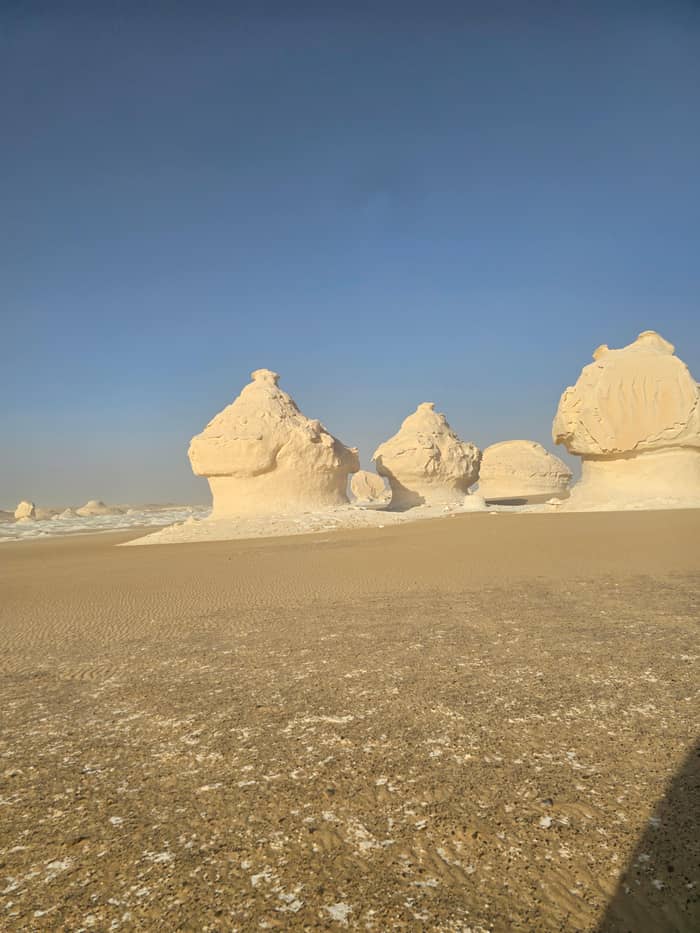
Gilded
Roman cemetery
See the tour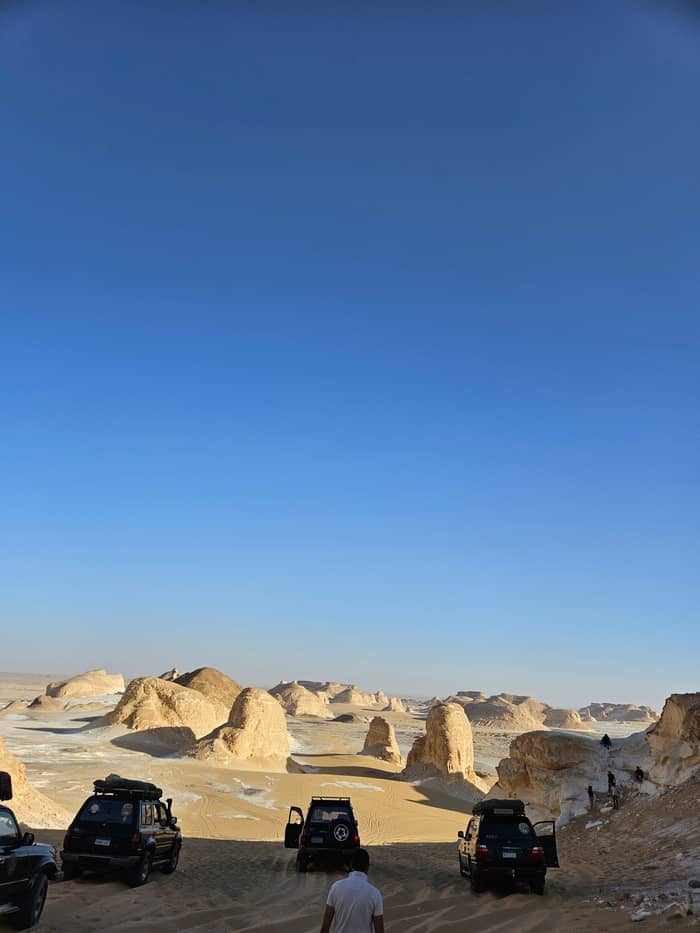
Painted
Merchant families
See the tourThe Valley of the Golden Mummies has an unlikely origin story. Hawass tells how an antiquities guard was crossing the desert on a donkey when the animal tripped, hitting its leg on the edge of a tomb.21 He locates the spot some 6 km south of Bawiti beside the Farafra road.24 That small accident opened one of the most remarkable Roman-period cemeteries found in Egypt.
Hawass says he went to see the mummies in May 1996, and that they were kept secret at first.15 The reason he gives is that the inspectorate lacked funding and staff, and that he feared thieves could smell the resin inside the mummies.25 A find held back for protection is rare in the headlines, and it shows how fragile such a cemetery is when it sits in open desert.
In 4 tombs that were excavated, 105 mummies were found, many of them beautifully gilded, in Hawass's words.3 The remains are around 2000 years old, yet they have survived the centuries remarkably well.4 The valley is not a single tomb but a cemetery, and Hawass writes that it appears to have been in use until the 4th century AD.13
The name Golden Mummies comes from the gilding. Hawass describes mummies with a face covered in plaster and a thin layer of gold,26 and he describes others with elaborate painted chest panels and crowns. Many were children, men and women in good condition, and the range of ages and ranks is part of what makes the cemetery so informative.
One tomb cut into the sandstone contained 43 mummies, in Hawass's count.27 Among the objects around the dead he lists Ptolemaic coins, the most interesting of which bears the face of Cleopatra VII.28 Such coins help date a burial and show that the people of Bahariya took part in a wider Mediterranean world, even from a remote oasis.
The Bahariya Oasis mummies are described here from the excavator's own account, so treat it as one voice and not a catalogue. The Tourism Authority says the golden mummies are the pride of the Bawiti Museum and turned the oasis's main town into a tourist magnet.5 The Ministry names the Valley of the Golden Mummies as one of the main attractions of the oasis, along with its hot springs.29
Video
Curtis Ryan Woodside on YouTube · Nothing is fetched until you hit play.
This temple is unique because it is the only one in Egypt that was built for a living pharaoh.
The oasis has more than mummies. Hawass calls the large fortress the most prominent monument at El Haiz, an ancient settlement of the Roman period.19 The Tourism Authority adds very old churches to its list of ruins.7 Together they show that Bahariya was a place where Egyptian, Greek, Roman and Christian communities lived in turn.
The sources here do not give opening hours, fees or condition for these sites, so this page states none. Rules for tickets and visits are set by Egypt's antiquities authorities and can change, and a guide or the inspectorate in Bawiti knows what is open that day. Do not rely on an old guidebook for hours, and carry some cash for any ticket, since a card terminal is unlikely.
El Haiz also appears on desert tours. A private 2-day listing mentions El Hez village with its cold spring on its first day. The spelling varies between sources, as Haiz, Hez and Heiz, so look for the village near the Black Desert on a map. It is a different place from the museum and temples in Bawiti.
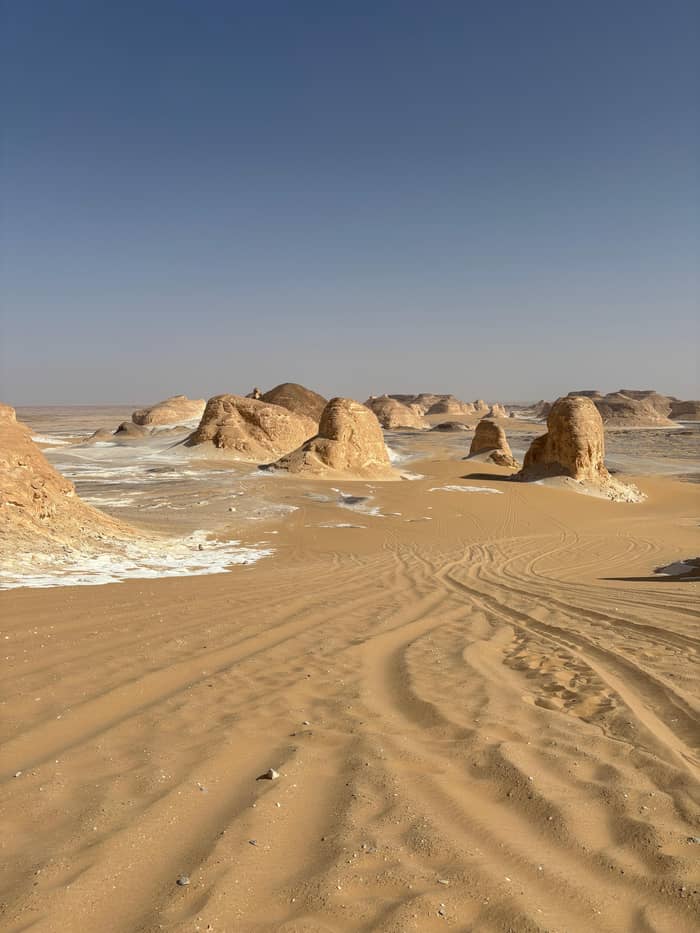
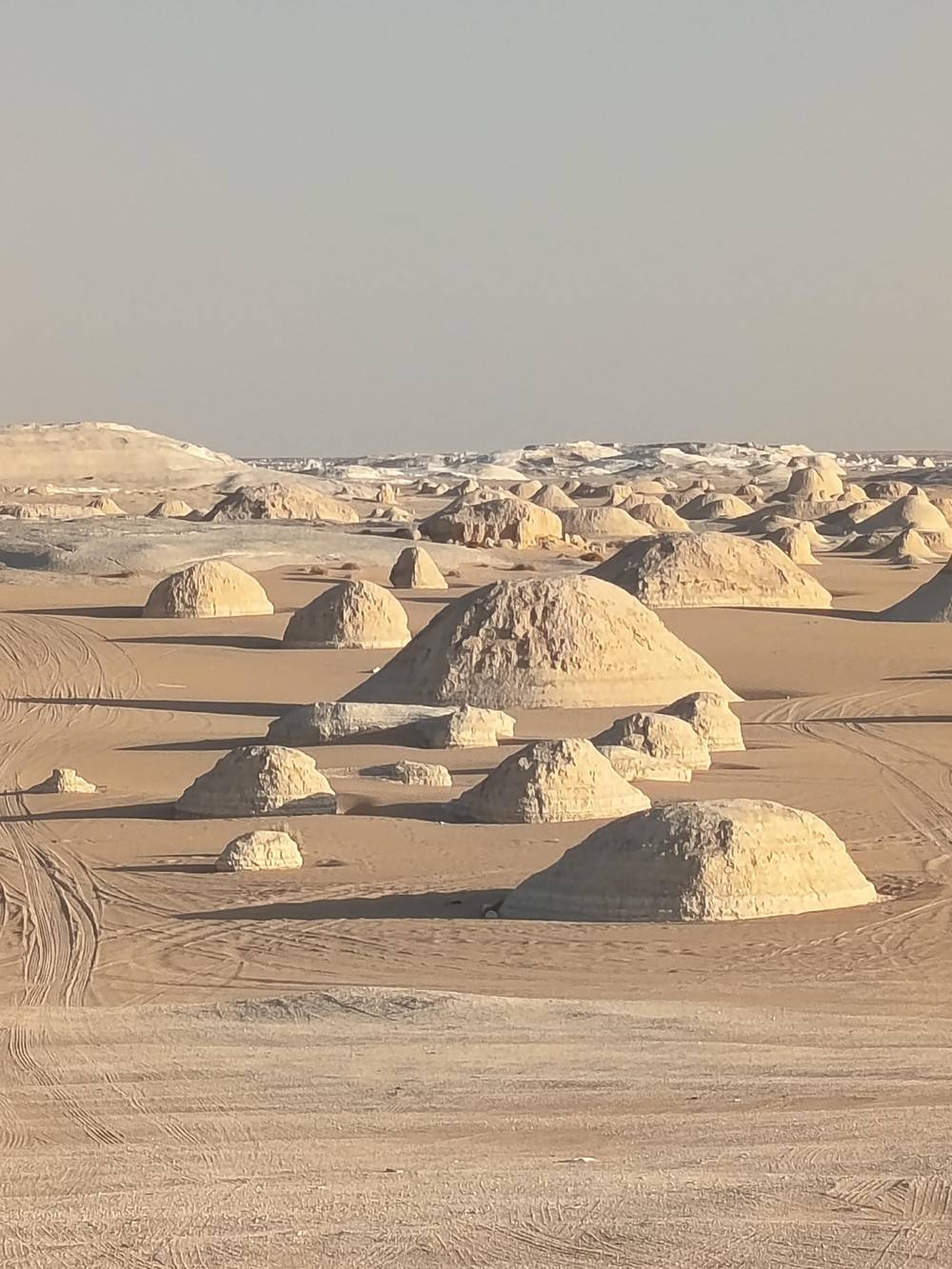
Be clear about what the tour does and does not cover. The 2-day tour listing mentions the oasis, Crystal Mountain, English Mountain, the museum of the White Desert National Park and one night in camp. On its second day it lists Bawiti, where the record adds dunes and a salt lake, and lunch in the oasis. It does not name the temple, the tombs or the mummy museum, so ask your operator whether a visit can be added.
If history is your main interest, spend a half day in Bawiti before or after your tour. The Giza governorate calls it the oasis capital, where services are most plentiful.23 A local guide can take you to the temple, the tombs and the museum, and explain the finds in a way that a page cannot. Combine that with a night in a hotel for a slower trip.
The 2-day camp tour costs from $206, and the booking is free to cancel until a day before the start. Use this page as a reading list for the oasis, then decide whether you want the landscape, the history or both. If you want both, a few extra hours in Bawiti turn a desert tour into a short course on the place.
FAQ
Hawass writes that 4 tombs held 105 mummies, many of them gilded.3
Hawass says the remains are around 2000 years old.4
The Egyptian Tourism Authority calls the mummies the pride of the Bawiti Museum.5
The listing names Bawiti and lunch in the oasis, so ask the operator about the temple and the museum.
Hawass notes it falls under the Giza governorate and its Department of Antiquities.10
Sources
Planning a night in the White Desert? Ask a real person here.